
Friday, November 30, 2018
Hamlet and Aeneas
In Latin, we have discussed Aeneas as a character. His main enemy throughout the Aeneid is Fury itself, which is represented in many ways. "Furor", Fury, is something that is chaotic and goes against the established order. Aeneas is called to be a new kind of hero in that his deeds aren't going to be in warfare, but instead in establishing a new settlement in Italy and leading his people with honor. Instead of staying to fight while Troy was falling to the Greeks, he was called by spirits of fallen warriors and his wife to flee and give hope to a future settlement, which would become Rome. Hamlet is too called to battle Fury; his uncle has disturbed the established order and he must put it back in place. This relates to the great chain of being; the chain, established order, has been disturbed, and there can't be peace until it is restored. Hamlet is visited by the ghost of his father just as Aeneas is visited by many guiding spirits, including his dad's. Hamlet, however, is called to violent revenge. This is a different type of calling than Aeneas's, and it is more traditional. He must avenge his dad who was killed to regain his honor and the throne, whereas Aeneas's goal is not about fighting and is meant to serve as a contrast between Aeneas and other more traditional war heroes.

Dante's Inferno and Vergil's Aeneid: Underworld Comparisons
In Latin class this year, we have been continuing reading
Vergil’s Aeneid, and I thought it was fun that we happened to reach the part
about Aeneas descending into the underworld as we started reading Dante’s
Inferno in English class. I noticed many parallels and connections between the
two versions of hell. One of the more obvious connections is Dante’s direct references
to Aeneas’s journey to hell. The two poets did organize their versions of hell
differently; Dante has drawn out circles and more clear directions than Vergil’s
mapping of hell, and Vergil has an area in his underworld that is peaceful and pleasant.
They both, however, have sections for different types of sinners, and Dido is
in both of their underworlds. Dido is in Vergil’s section of people who have
been consumed by love, and is in Dante’s area for lust. Vergil showed that Dido
was not lustful; she was actually very surprised to fall in love again after
her husband was murdered. Vergil’s boundaries and sections are a bit more fluid
than Dante’s, I think, but he does mention 9 circles, which surprised me. The
rivers and boatmen are common to both because of their presence in mythology. In
both stories, there is a guide as well as some divine intervention. Dante has
Vergil, and Aeneas has the Sybil. Both have a sort of “fate” or reason for
being guided down there. Aeneas’s whole journey has been dictated by the gods; it
is even divine permission that allows him to get the golden bough and go to the
underworld. Dante has help from three divine women. They each have to calm Cerberus
by throwing something into his mouths; Aeneas and the Sybil give him honey
cake, which he probably preferred over Dante and Vergil’s slime. The boatmen of
the underworld are hesitant to bring each group across, but eventually do. This
was actually a small point of humor in the Aeneid, just as Dante tried to
include some humor with the salutes and signals of the demons to one another. Furies
attack sinners in both; in the Aeneid, they attack the gluttons who try to eat
at the feast eternally laid out before them. Aeneas and Dante talk to spirits in
the underworld, and are both shaken by their experiences, but Aeneas is more
caring than Dante and isn’t mean to spirits he meets or recognizes. Aeneas’s
father is in the underworld and he seems unaware of how Aeneas got there or
what trials he had to go through on his journey, but he shows Aeneas the future
and fate of Rome. This reminded me how people in Dante’s hell can’t see the
present, but can see and predict the future. Betrayal against those who trust
you, particularly family and clients, is something that Romans despised, and
theses sins were shown in both underworlds. The authors also both set their
work’s timeline behind their own and were able to make references and
predictions of the future that had already in fact happened. There are many
more similarities, but these were a few that stood out to me while reading the
two works.
Wednesday, November 28, 2018
The Lion King and Hamlet
I am going to start this blog post off by saying if you have not seen the Lion King yet (I'm looking at you, Mrs. King), you need to do it A.S.A.P., especially before the live action film comes out. If you have seen it, then Hakuna Matata, you're on the right track.The Lion King is hands down the best Walt Disney film of all time, and do not try to argue this with me. The Lion King has many many parallels to Hamlet, this is not new news. In fact, most people say that the Lion King was derived from the Shakespeare play as well. In addition to that observation, people have concluded that the Lion King 2: Simba's Pride is also an ode to another Shakes classic, Romeo and Juliet (of course with the exception of the tragic deaths at the end).
The basic plot of the Lion King, in case you didn't know because maybe you haven't seen the movie or something, *cough cough* Mrs King *cough*, is when Scar, Simba's power hungry uncle, kills Mufasa, Simba's dad and the king of Pride Rock, in order to gain power and rule the land.This relates to the play because as we just read in Act 1 Scene 5, Claudius (supposedly) killed King Hamlet. But you might want to Be Prepared for this newsflash because it might take you for a loop: Hamlet and The Lion King differ in the fact that in the Lion King, Scar needed to rid Simba in order to gain control over the throne. To do this he convinces Simba as a cub that he killed his own father, causing him to run away. This differs from Hamlet, because in the play Claudius was next in line for the throne- before young Hamlet.
Another parallel between the two is the moment when Simba's seeking advice while grieving obviously after his father's death and sees Mufasa's spirit in the stars, this scene is quite the tear-jerker considering the circumstances but hey I guess thats The Circle of Life. The last parallel to make is the connection between Claudius and Gertrude and Scar and Sarabi. After Hamlet's death we know that Gertrude does not mourn much and immediately moves on, offering a large motif of the pay: a sort of dramatizing and theatrical characteristic. In the Lion King, Sarabi does not do the same and there is not a defined line of her and Scar's relationship after Mufasa's death but here certainly is hinting at the fact that Scar makes Sarabi his property after-- how romantic, Can you feel the Love Tonight?
Overall my main takeaway from this is that Mrs. King should watch Lion King.
The basic plot of the Lion King, in case you didn't know because maybe you haven't seen the movie or something, *cough cough* Mrs King *cough*, is when Scar, Simba's power hungry uncle, kills Mufasa, Simba's dad and the king of Pride Rock, in order to gain power and rule the land.This relates to the play because as we just read in Act 1 Scene 5, Claudius (supposedly) killed King Hamlet. But you might want to Be Prepared for this newsflash because it might take you for a loop: Hamlet and The Lion King differ in the fact that in the Lion King, Scar needed to rid Simba in order to gain control over the throne. To do this he convinces Simba as a cub that he killed his own father, causing him to run away. This differs from Hamlet, because in the play Claudius was next in line for the throne- before young Hamlet.
Another parallel between the two is the moment when Simba's seeking advice while grieving obviously after his father's death and sees Mufasa's spirit in the stars, this scene is quite the tear-jerker considering the circumstances but hey I guess thats The Circle of Life. The last parallel to make is the connection between Claudius and Gertrude and Scar and Sarabi. After Hamlet's death we know that Gertrude does not mourn much and immediately moves on, offering a large motif of the pay: a sort of dramatizing and theatrical characteristic. In the Lion King, Sarabi does not do the same and there is not a defined line of her and Scar's relationship after Mufasa's death but here certainly is hinting at the fact that Scar makes Sarabi his property after-- how romantic, Can you feel the Love Tonight?
Overall my main takeaway from this is that Mrs. King should watch Lion King.
Saturday, November 17, 2018
Another Reference to Beatrice
Going off of Natalia's post, I have found another reference to Beatrice in the mini cartoon series of "Over the Garden Wall". Throughout the episodes, there are many different allusions and parallel to Dante's Divine Comedy, but none so as blatant as the reference to Beatrice. In the show, two young boys are lost in a mysterious forest and are tasked with finding their way home, while meeting a variety of odd characters and avoiding something called The Beast. It is heavily implied throughout that they are journeying through some sort of afterlife or purgatory, and one of the few friendly creatures they encounter and who acts as their guide is a blue bird named Beatrice.
Dante's guide to Florence
In case you all did not know, I'm going to Italy this summer. I'm actually stopping in Florence, so I decided to see what landmarks were Dante related to see if I wanted to add anything to the itinerary. So I decided to share my findings.

Dante's house and museum

Dante's death mask, on display at the Palazzo Vecchio
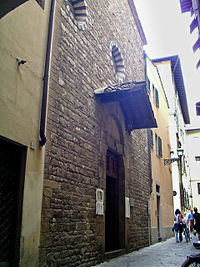
santa margherita de' cerchi church. This is where Dante first saw Beatrice at the age of 9 and fell in love with her.
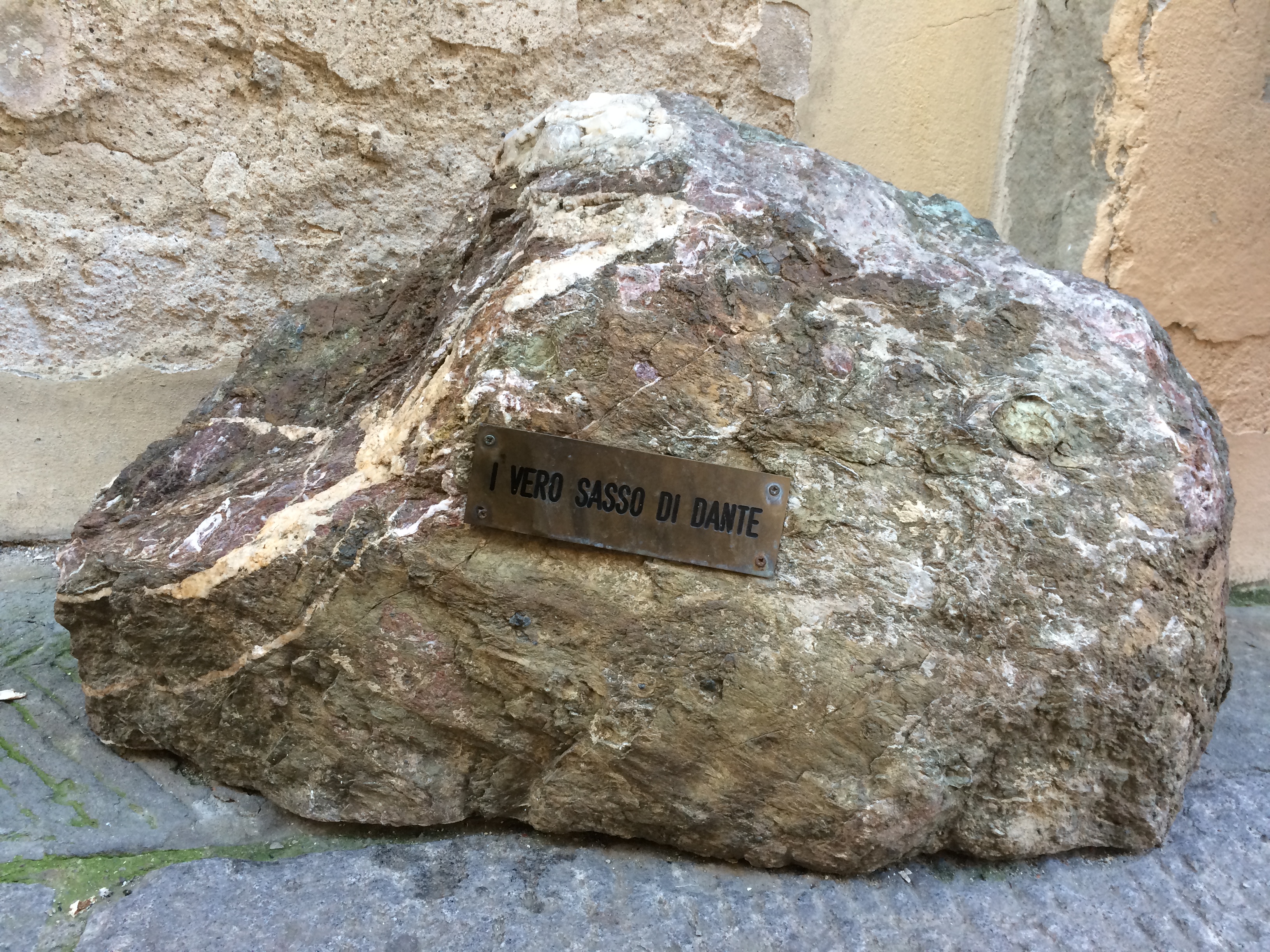
sasso di dante. This means Dante's stone. Dante used to sit on this stone and write many of his poems

The bargello. This used to be the headquarters of the city council of Florence, and this is where Dante's exile became official. It is now a museum.
Dante's house and museum
Dante's death mask, on display at the Palazzo Vecchio
santa margherita de' cerchi church. This is where Dante first saw Beatrice at the age of 9 and fell in love with her.
sasso di dante. This means Dante's stone. Dante used to sit on this stone and write many of his poems
The bargello. This used to be the headquarters of the city council of Florence, and this is where Dante's exile became official. It is now a museum.
Cleopatra in Dante's Hell
Among the people Dante placed in his circles of hell was Cleopatra. Last year for our independent reading English project, I read a book called "Cleopatra" about her life and history. Something I remember was how Cleopatra was portrayed as manipulative and lustful by her opponents. This was because she was a powerful woman; other rulers and particularly people who didn’t think a woman should rule felt intimidated by her and thus tried to make her seem fraudulent and mischievous rather than strong and powerful. Even our modern day Halloween costumes for Cleopatra focus on beauty and on revealing cloths rather than power or other aspects of her. Dante shouldn’t have put her in his hell in the circle of the lustful; she shouldn't be remembered that way, and that is one point the author of my independent reading book, Stacy Schiff, was passionate about. She wanted to set Cleopatra's history straight and explain all of the false depictions.
A Reference to Beatrice
Dante’s letters and unreturned love for Beatrice reminded me of something from A Series of Unfortunate Events. The narrator, Lemony Snicket, had loved a girl named Beatrice who said no to his marriage proposal. She died soon after, just as Dante's Beatrice had died young. The introduction for each new episode on Netflix has a short love letter written from Lemony Snicket to Beatrice. If this was intentional, it makes sense in keeping with the author’s style. The series is full of plays on words and references, and Beatrice might be another!
Subscribe to:
Posts (Atom)

